
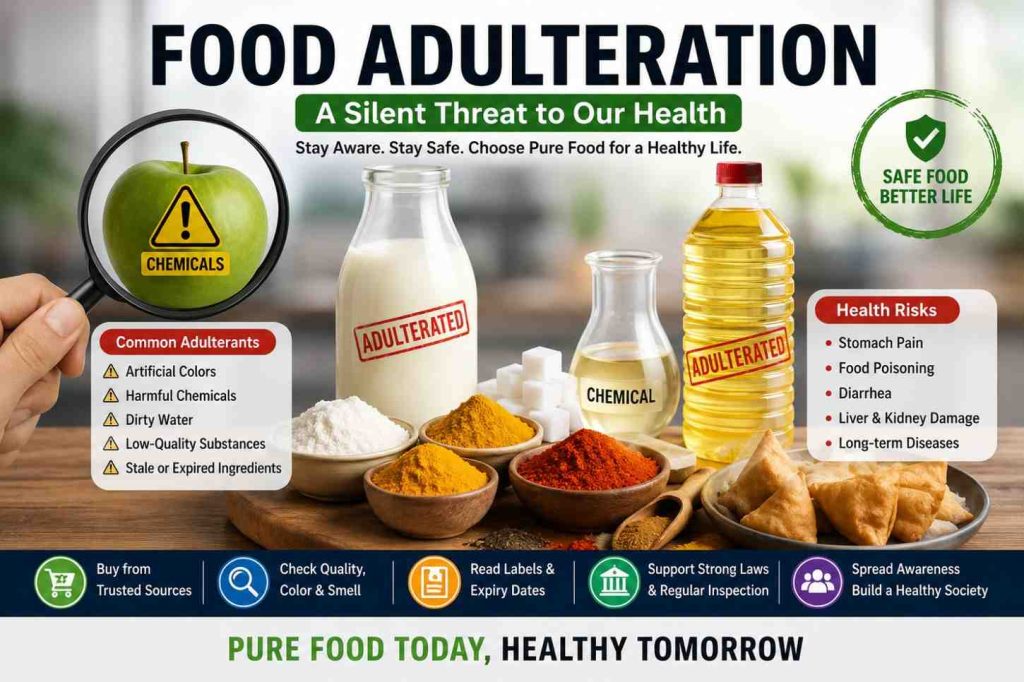
Adulteration of food and beverages involves the presence of harmful chemicals, poor quality materials, artificial food colours and other toxic components, which are added to the food and beverages at the time of the manufacturing process. Can render food unsafe to eat and poses significant health risk for consumers. Some common types of food adulteration include the use of preservatives in fruits and vegetables, artificial colourants in drinks, bakery products, confectionery and junk food, the use of formalin in fish and the addition of water or chemicals in milk in hotels and restaurants. These unfair food practices are commonly used by dishonest businessmen and greedy shop keepers in order to make short-term profit, without regard for consumer safety.
It is especially important for students from Class 5 to HSC including SSC, HSC, board exam students to learn about this issue. The Food Adulteration Paragraph provides students a simple explanation of the meaning of food adulteration, its causes, harmful effects, and how to prevent it. Impure food can have adverse impacts on public health and can cause heart, liver, kidney, bone and digestive issues. It also adversely affects society by the loss of trust in food vendors and heightening the risks of serious diseases.
Raising awareness, adopting safe food habits, choosing food carefully, monitoring markets regularly, enforcing government measures and punishing criminals can help to prevent food adulteration. Through learning more about the impact it has on human health and everyday life, students and consumers can take more responsibility for their health and learn to recognize unsafe food and help make the world a healthier, safer place.
Food Adulteration Paragraph in 100 Words
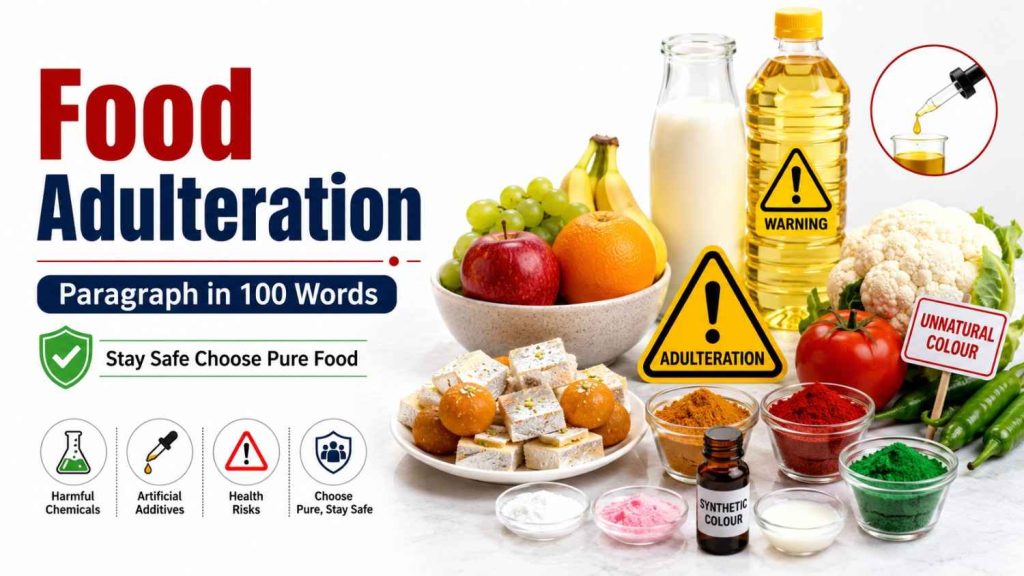
Adulteration of food is the process of adding cheap, harmful or low-quality materials to a food to boost profit. It can cause food to become unsafe and decrease the nutritional value. Milk, oil, spices, fruits, vegetables and sweets are common food products that are adulterated. Dirty water, artificial colours, chemicals or spoiled ingredients can be added to the product to enhance appearance or quantity that may be done by the trader. Consuming this type of food can lead to stomach pain, indigestion, food poisoning and even serious diseases. People should examine and inspect labels, use expiry dates, smell, colour and quality as guides when purchasing. Today, food adulteration can be prevented and everyone’s health safeguarded if strong food safety laws are in place, markets are regularly inspected, trusted market participants are available, and the public is aware of food safety.
Food Adulteration Paragraph for Class 6 and 7 in 150 Words
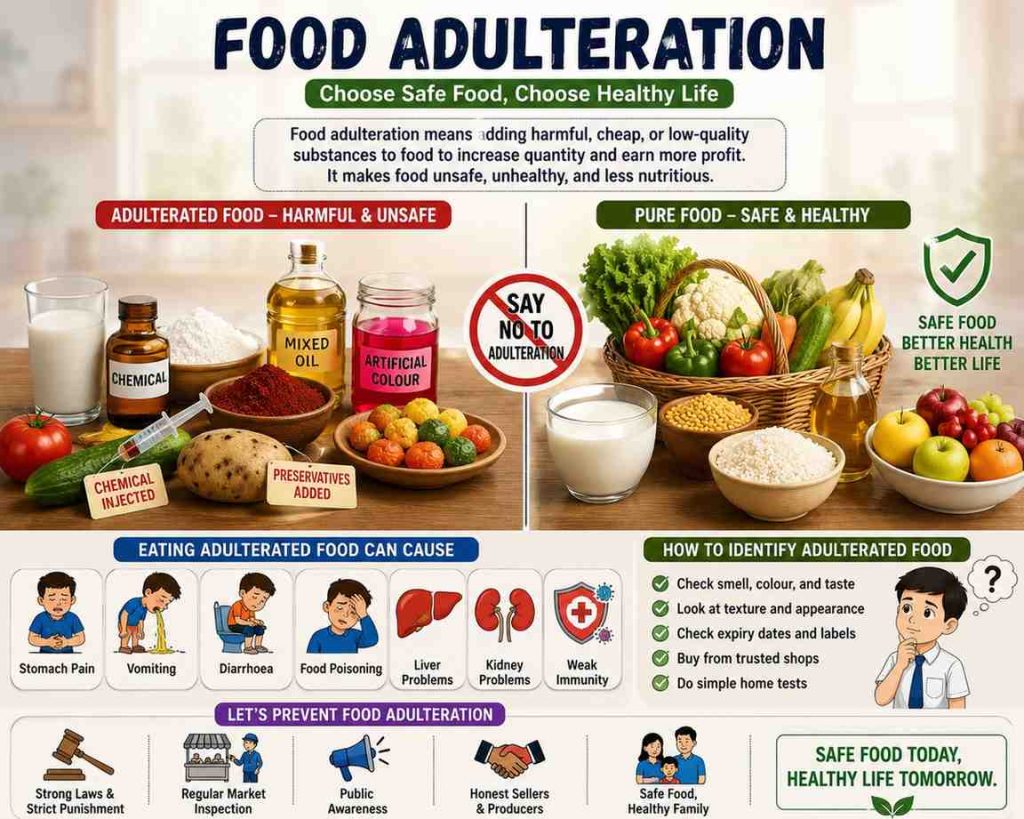
Adulteration of food is the intentional addition of harmful, cheap or low quality materials to food to improve both quantity and profit. It renders food unsafe, unhealthy and less nutritious. But dishonest traders might fill the milk with water, add artificial colours to sweets, add bricks powder to spices and add harmful chemicals to fruits and vegetables. It can be a fresh and appealing looking food, but it can have a negative impact on human health.
Consumption of contaminated food may lead to abdominal pain, vomiting, diarrhea, food poisoning, and chronic diseases like liver and kidney. Health risks are higher for children and elderly. Consumers can use all five senses to detect unsafe food: smell, color, taste, feel and packaging, as well as the date of expiry. There is also a lower risk of buying from trusted shops and sealed products. There is a need for stringent legislation, periodic food market surveillance, fining of offenders and public awareness to stop food adulteration. Pupils should be educated on food safety and why others should be choosing to eat food that is pure and healthy in their lives.
Read more: statuscaptionbangla
Food Adulteration Paragraph in 200 Words for Class 8
Adulteration of food products occurs when harmful, low quality and/or inferior ingredients are intentionally added to food to either boost its weight, quantity or profit. It is a significant public health problem because contaminated food becomes unfit for human consumption and ceases to be natural food. They are often found in food, such as water added to milk, artificial color added to sweets and spices, chemicals added to fruits or the addition of spoiled ingredients to packaged food. These often involve milk, edible oil, vegetables, fruits, spices, snacks and sweets.
Food poisoning, stomach infection, vomiting, diarrhoea and weakness are some of the problems that can arise from eating contaminated food. Extended use can be harmful to liver and kidneys and may lead to severe illnesses. These health risks are especially harmful to children, pregnant women, sick individuals and the elderly. Food should be carefully inspected when purchasing by the consumer in terms of smell, colour, taste, texture, label, packaging and expiry date. Sometimes, simple home tests can be helpful, and laboratory tests provide more accurate information.
Prevention of food adulteration can be achieved by implementing rigorous food safety regulations, frequent food safety checks on the markets, penalization and awareness building. Consumers are advised to purchase goods that have been certified and from reputable vendors and report any suspicious food practices. Safe food is the health of the people, the right growth, a robust immune system and a healthy society for every new generation.
Food Adulteration Paragraph for Class 10 in 250 Words
The addition of harmful, inexpensive, inferior or undesirable materials to food to increase its quantity, enhance its appearance, prolong its shelf life, or to make more money. It renders food unfit for man and reduces its nutritional content. Unscrupulous traders can adulterate the milk or sweets with water or detergent, add artificial colour to spices and sweets, pesticide to the fruits and vegetables, or oil to ghee. Expired or spoiled ingredients can also be used again in the processing, packaging, storage or selling phases.
Many common food products are affected by this problem, such as bakery products, fruits, vegetables, snacks, edible oil, spices, rice and milk products. These types of adulterated food can give stomach pain, vomiting, diarrhoea, food poisoning and digestive infections. Consuming it over a prolonged period of time could result in liver damage, failure of the kidneys, impaired immunity and other serious illnesses. Children and pregnant women, elderly and patients are very vulnerable.
Food labels, expiry dates, packaging, smell, colour, taste, and texture can help to minimize the risk to consumers. Products which have been certified and sealed by reputable retailers generally pose a lower risk than products which are a little cheaper or have not been packed. Some adulterants can be detected by simple tests at home, but laboratory tests are more accurate.
Food adulteration can only be prevented with strict legislations, frequent inspections in the markets, effective punishments, vigilant traders and public awareness. Students can assist by learning about safe food practices and educating their families. Pure food is a necessary factor in health, proper growth and a strong and productive society. It also advances consumer rights and lowers healthcare costs, establishes trust with the public, and makes food safer for all of us.
Food Adulteration Paragraph for HSC in 300 Words
Food adulteration is the action of introducing harmful, low quality, cheap, or banned materials into food products for profit. This can be done to add weight and/or quantity, enhance colour and appearance, reduce production cost or improve shelf life. Therefore, the natural quality, nutritional value and safety of food is lost. Common examples include the mixing of water, detergent with milk, artificial dyes with spices and sweets, low quality oil with ghee, chemicals with fruits, vegetables and packaged or restaurant food that has gone bad.
Food adulteration is related to the public health and life. Adulteration may occur in milk, rice, edible oil, fish, fruits, vegetables, spices, bakery products, beverages and snacks. These products might seem fresh, but they may be hiding some risks. Food poisoning, stomach pain, vomiting, diarrhoea, digestive infections and weakness are consequences of eating food that has been adulterated. Exposure over a long period can affect the liver and kidneys, reduce resistance to disease and cause deadly illnesses. Children, pregnant women, elderly people and patients are more vulnerable since their bodies are likely to respond more strongly to toxic materials.
Consumers should examine food carefully before buying. Changes in smell, colour, taste, texture, packaging, or expiry date may indicate poor quality. People should choose certified, sealed products, buy from trusted sellers, avoid suspiciously cheap food, and wash fruits and vegetables properly. Simple home tests may help detect certain adulterants, but laboratory testing provides more accurate results.
When purchasing food, consumers should scrutinize their purchase. If the smell, color, texture, packaging or expiration date of the product change, it may be poor quality. Consumers should purchase food that is certified and sealed, purchase from trusted sellers, be wary of things that are too good to be true and wash fruits and vegetables as needed, and follow other guidelines. Some can be detected with simple home tests, others by laboratory testing.
Food Adulteration Bangla Meaning
Food adulteration-এর বাংলা অর্থ হলো খাদ্যে ভেজাল। বেশি লাভ করার জন্য খাদ্যের সঙ্গে ক্ষতিকর, নিম্নমানের, সস্তা বা অপ্রয়োজনীয় পদার্থ মেশানোকে খাদ্যে ভেজাল বলা হয়। অসাধু ব্যবসায়ীরা দুধে পানি, মসলায় কৃত্রিম রং, মিষ্টিতে ক্ষতিকর রাসায়নিক এবং ফল ও সবজিতে বিষাক্ত পদার্থ ব্যবহার করতে পারে। ভেজাল খাবার খেলে পেটের সমস্যা, ডায়রিয়া, খাদ্যে বিষক্রিয়া, লিভার ও কিডনির ক্ষতি এবং অন্যান্য গুরুতর রোগ হতে পারে। খাদ্যে ভেজাল প্রতিরোধ করতে বিশ্বস্ত দোকান থেকে খাবার কেনা, প্যাকেট ও মেয়াদ শেষের তারিখ পরীক্ষা করা এবং জনসচেতনতা বৃদ্ধি করা জরুরি। নিরাপদ ও বিশুদ্ধ খাবার একটি সুস্থ জীবনের জন্য অত্যন্ত গুরুত্বপূর্ণ।
Food Adulteration Word Meaning Table
| English Word | Bengali Meaning |
| Food adulteration | খাদ্যে ভেজাল |
| Adulteration | ভেজাল |
| Harmful | ক্ষতিকর |
| Substance | পদার্থ |
| Inferior | নিম্নমানের |
| Unsafe | অনিরাপদ |
| Artificial colours | কৃত্রিম রং |
| Chemicals | রাসায়নিক পদার্থ |
| Contaminated | দূষিত |
| Consumer | ভোক্তা |
| Public health | জনস্বাস্থ্য |
| Nutrition | পুষ্টি |
| Food poisoning | খাদ্যে বিষক্রিয়া |
| Disease | রোগ |
| Prevention | প্রতিরোধ |
| Awareness | সচেতনতা |
| Inspection | পরিদর্শন |
| Expiry date | মেয়াদ শেষের তারিখ |
| Trusted seller | বিশ্বস্ত বিক্রেতা |
| Strict laws | কঠোর আইন |
| Packaging | মোড়কজাতকরণ |
| Laboratory testing | পরীক্ষাগারে পরীক্ষা |
| Profit | লাভ |
| Quality | গুণগত মান |
| Healthy society | সুস্থ সমাজ |
Frequently Asked Questions About Food Adulteration
1. What is food adulteration?
Adulteration of food is defined as the addition of harmful, cheap, inferior or undesirable materials into food. Typically it is carried out to boost quantity, quality, shelf life or with the aim of making more money.
2. Why is food adulteration dangerous?
Food adulteration render the food unsafe and less nutritious. Consuming contaminated food may lead to stomach ache, vomiting, diarrhoea, food poisoning, liver damage, kidney damage, and other diseases.
3. What are the common examples of food adulteration?
These can be adding water to milk, adding artificial colours to spices, sweets, etc., low quality oil to ghee, and adding bad chemicals to fruits, vegetables, fish, and packaged foods, etc.
4. What are the main causes of food adulteration?
The primary causes of food adulteration are greed to increase profit, weak market monitoring, poor law enforcement, lack of awareness and need to improve the colour, weight or appearance of food.
5. Which foods are commonly adulterated?
The most popular food items that are commonly adulterated are: Milk, edible oil, ghee, spices, rice, fish, fruits, vegetables, sweets, bakery products, drinks, and packaged snacks.
Conclusion
Adulteration is a risky and unscrupulous practice which imperils public health, food safety and consumer rights. Food is not safe to eat if it has harmful chemicals, artificial colours, water that is not safe to drink, ingredients that have gone bad or other poor quality material. Food poisoning, digestive issues, low immunity, liver damage, kidney disease are some of the long-term health issues that could result from regular consumption of adulterated food. This issue needs to be addressed collectively by the consumers, traders, students, food producers and government authorities. Food adulteration can be minimized by strict laws, frequent inspections of the markets, laboratory testing, heavy penalties, responsible food production, and public awareness. Foods must be purchased by checking the labels, packaging, expiry dates, and quality marks before buying. Understanding a Food Adulteration Paragraph helps learners recognise its causes, effects, and preventive measures. Pure and safe food is essential for a healthy, active, and productive life.
You may also read