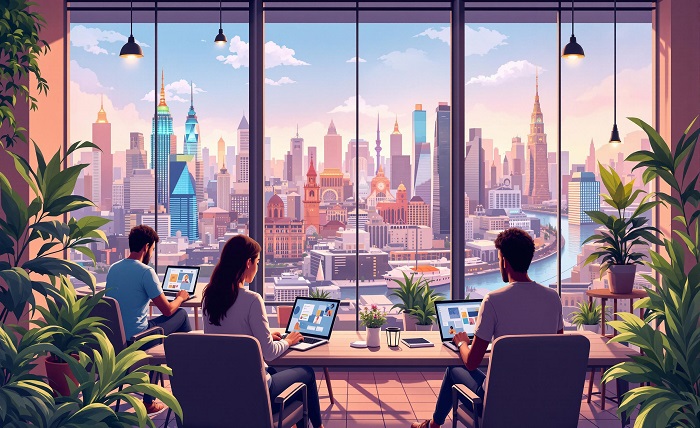
For many remote workers, Europe feels like a single, sprawling city stitched together by fast trains and budget flights. You can spend a focused month in a serious Central European capital, then move to a relaxed coastal town without crossing an ocean or changing time zones.
Yet digital nomad life here is more than charming balconies and laptop photos; it is built from careful decisions about visas, taxes, housing, routines and even leisure habits – some people decompress in gyms, others join language exchanges, and a few unwind with online entertainment such as funky time game app download, though it remains sensible to keep entertainment budgets firmly under control.
What Does It Really Cost?
Costs vary dramatically from region to region. In smaller cities of Eastern or Southern Europe, a single person can often cover a room in a shared flat, food, local transport and a basic mobile plan on a moderate monthly budget. Cafés are still reasonably priced, and co-working memberships, while not cheap, do not swallow half your income. For many freelancers, this cost level feels sustainable over the long term.
Move to the big economic and political centres and the picture changes. Rent can easily double, and everyday services rise with it. Coffee, public transport and occasional nights out quickly add up, especially in tourist-heavy districts. The trade-off is access to major airports, regular meetups, bigger professional networks and extensive cultural institutions. Many nomads respond by rotating: a spell in a prestigious but pricey hub, followed by several months in a quieter, cheaper city to rebalance their finances.
What Kind of Cities Work Best?
Rather than hunting for a single “best” city, it helps to think in types. Medium-sized university towns are often excellent for remote work. They tend to offer lively cultural scenes, plenty of cafés, walkable centres and a steady flow of international students. Housing demand is present but not extreme, and locals are used to people staying for one or two semesters, which suits the nomad rhythm perfectly. Larger capitals, by contrast, offer more contacts and events but demand higher budgets and a stronger tolerance for crowds.
Navigating Visas and Paperwork
Behind every romantic story of spontaneous travel sit some very practical questions about legality and stability. Short-term visitors from many regions can move relatively freely through large parts of Europe, but staying longer to work remotely demands attention to rules. Some countries now offer digital-nomad or remote-worker visas, usually with income thresholds, health-insurance requirements and occasionally tax obligations.
A prudent approach is to treat visas like project deadlines. Map out the maximum days you can spend in each area, then design a yearly route that respects those limits. Constant border-hopping to reset a short-stay clock may look adventurous, but it can be tiring and risky if regulations tighten. Longer stays of three to six months in one base city give you time to build friendships, understand local life and maintain a stable work rhythm.
Housing, Workspaces and Daily Structure
Accommodation shapes your days more than almost any other choice. In many European cities, older buildings look atmospheric but are poorly insulated, which means cold winters or overheated summers plus high utility bills. Before signing anything, it is worth asking about heating, air circulation and typical costs. You also want to know whether your street becomes loud at night, or during weekend festivals.
Workspaces deserve equal attention. Some nomads thrive in co-working spaces, enjoying the separation between home and job as well as spontaneous networking. Others prefer to work from home and visit cafés only occasionally. If you fall into the second group, a decent desk, strong Wi-Fi and good natural light are essential. Many people end up favouring residential neighbourhoods just outside the tourist centre, where rents are lower, supermarkets are close and crowds thin out after dark.
Culture, Community and Everyday Life
Numbers on a spreadsheet rarely capture why people stay in a particular place. The real attraction often lies in the small, repeated moments of local culture: evening walks along a river, crowded markets on Saturdays, slow family lunches, or outdoor concerts on warm nights. Showing up at the same café, park or community event week after week gradually turns you from a passing visitor into a familiar face.
Learning even a little of the local language amplifies this effect. Being able to greet neighbours, read basic signs and order food without pointing at the menu signals respect and curiosity. Locals are often generous teachers, and those simple interactions can lead to invitations, collaborations or friendships that make a temporary city feel unexpectedly like home.
Balancing Freedom With Well-Being
There is a hidden danger in the constant freedom of nomad life: if every decision is open, it is easy to drift. Too many moves in a single year, irregular work hours and frequent late nights in new cities can quietly erode both income and health. Many experienced nomads slow down on purpose, limiting the number of moves, setting fixed work blocks, and treating rest, exercise and sensible insurance as part of the job rather than an afterthought.
In the end, digital nomad life in Europe works best when you frame the continent not as a checklist of cities, but as a flexible base. You might choose one “home” city that you return to each year, then alternate it with shorter stays elsewhere. By reviewing your costs, well-being and professional growth regularly, you can adjust the balance between adventurous exploration and calm routine. Done thoughtfully, Europe becomes not just a beautiful background for your laptop, but a long-term setting for a stable, interesting and genuinely human way of working.